


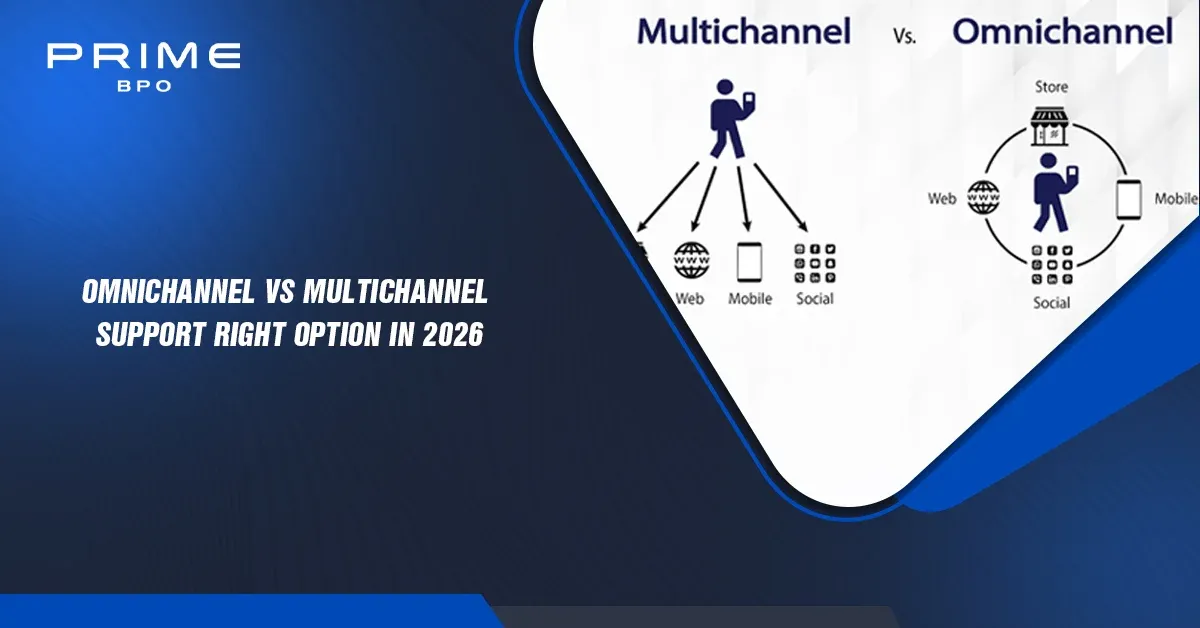
Your customer emailed about his delayed order. Then he called to follow up but the agent had no idea about the earlier email that he sent. The customer has to explain the whole problem again. This is the time that is more than a small annoyance. It shows that the main difference is between multichannel and Omnichannel support. Also why a smooth experience can make the customers stay or leave.
What Is the Difference Between Multichannel vs Omnichannel Support?
The multichannel support means that a business offers separate channels like phone, email, live chat and social media and each of these channels operates on its own with no shared customer history. On the other hand Omnichannel support means that all these same channels are connected with each other into one system so that the agent on any channel can see the customers full conversation history without asking them to repeat it. The word that separates these two is integration not the number of channels.
Key points
- Multichannel offers many channels. Omnichannel connects them into one continuous conversation.
- The core difference is data integration, not channel count.
- Disconnected channels force customers to repeat themselves, which directly hurts satisfaction scores.
- Zendesk's CX Trends Report 2026 found that 74% of consumers now expect service to be available around the clock, and 88% expect faster responses than they did a year earlier, pressure that disconnected multichannel setups struggle to handle.
- Small and early-stage businesses can often run well on multichannel. Growing or high-volume businesses usually need omnichannel to protect retention.

What Is Multichannel Customer Support?
Multichannel support means that a business gives customers multiple ways to reach out to them, such as a phone line, an email inbox, a live chat and a social media page. Each channel is operated and tracked separately. If a customer switches from email to phone, then the phone agent generally starts from zero.
This set up is very common because it is easier to set up and cheaper to run. A small team can manage a shared inbox and the phone line without needing a unified platform. The trade-off shows up at the moment when a customer contacts you through more than one channel about the same issue.
Zendesk research on customer experience notes that when agents have little to no context on the prior interaction then 60% of the customers say that they have to repeat themselves which is directly damaging the experience. The repetition is defining weakness of multichannel support, not a rare edge case.

What Is Omnichannel Customer Support?
Omnichannel customer support connects all the communication channels such as phone, email, chat, SMS, WhatsApp, and social media, in one system. This will let the agents see the customer's full conversation history including what they asked and what the agent promised to solve.
This is the model behind most modern omnichannel contact center software. The channels themselves may look identical to a multichannel setup from the outside. The difference is entirely in what happens behind the scenes, in the data layer that ties every touchpoint back to one customer.
Industry data backs the payoff. Retailers are using unified omnichannel platforms to resolve issues roughly 45% faster than those without one, according to eDesk's 2026 ecommerce customer service analysis, and only 19% of ecommerce retailers currently offer unified support across four or more channels. While half still rely on a single channel. That gap between what customers expect and what most companies deliver is where omnichannel support comes to save its return.

Multichannel vs Omnichannel Support: Side-by-Side Comparison
|
Factor |
Multichannel Support |
Omnichannel Support |
|
Channel availability |
Multiple channels offered |
Multiple channels offered |
|
Data sharing across channels |
Siloed, each channel separate |
Unified, one customer record |
|
Customer repeats themselves |
Common when switching channels |
Rare, agents see full history |
|
Setup cost and complexity |
Lower, simpler tools |
Higher, needs integrated platform |
|
Best fit |
Small teams, early-stage businesses |
Growing teams, high support volume |
|
Resolution speed |
Slower when issues span channels |
Up to 45% faster resolution reported (eDesk 2026) |




























Omnichannel vs Multichannel Support Marketing: Is It the Same Distinction?
The same principle applies in marketing, with a slightly different focus. Multichannel marketing means a brand advertises across several platforms, such as email, paid social, and search, but each campaign runs independently with its own messaging and its own data.
Omnichannel marketing connects those campaigns so a customer sees a consistent message and gets recognized as the same person whether they are on email, on a retailer's app, or in a physical store. Multichannel e-commerce sales in the United States were projected to reach $892.4 billion in 2026, a 15.0% year-over-year increase, reflecting how much revenue still flows through channels that are not necessarily connected to one another (eMarketer data via Capital One Shopping Research). The support and marketing versions of this distinction both come down to the same question: does the data follow the customer, or does it stay locked inside each channel?
Omnichannel vs Multichannel Contact Center: What Changes Operationally
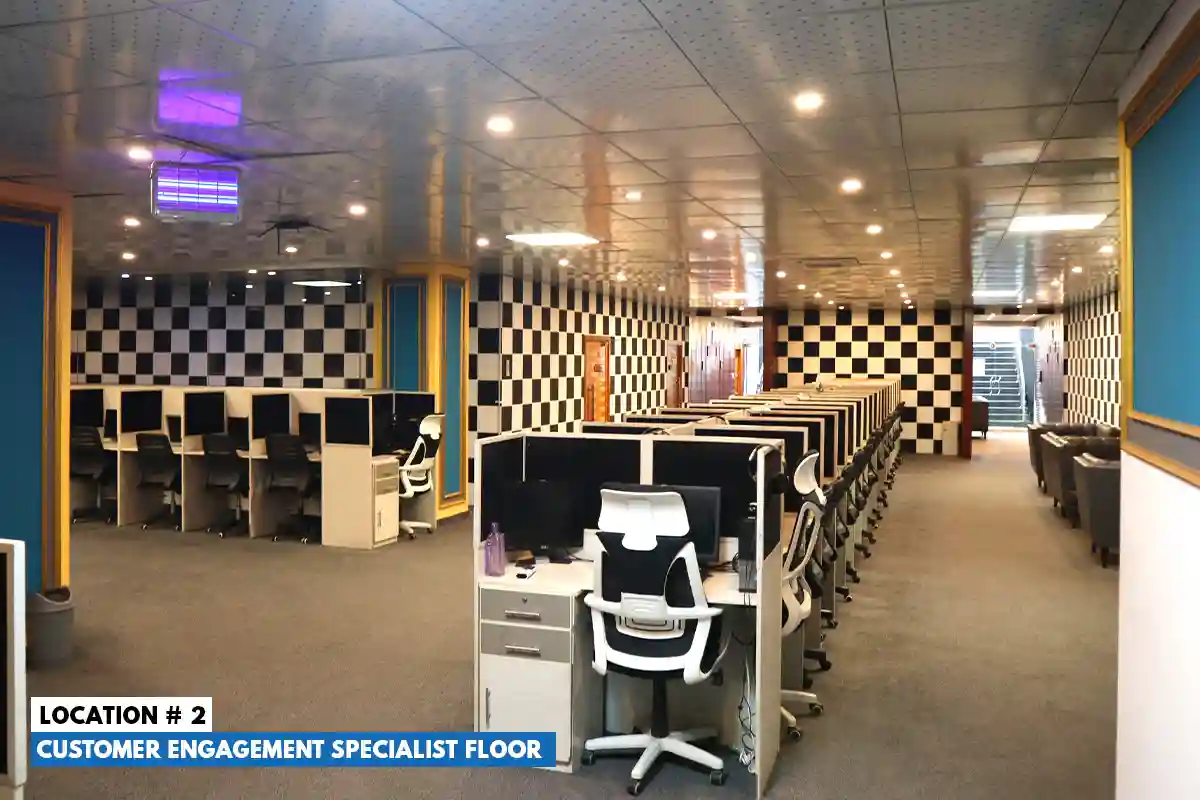
A multichannel contact center typically runs separate queues for phone, email, and chat, often with separate software for each. Agents are usually trained and scheduled per channel, and reporting has to be manually combined to get a full picture of volume and performance.
An omnichannel contact center routes every channel into one line with one view of each customer. Agents can be trained to handle any channel rather than being locked into just one, which also makes staffing more flexible during the high spikes. This is also where AI-driven routing and self service tools tend to be layered in, since a shared data record makes automation more accurate.
Omnichannel Communication vs Multichannel Communication in Practice
The communication channels are the same in both models, such as phone, email, SMS, chat, and social media. The main difference is how these channels work together.
In multichannel each channel works separately so that the customers have to explain their issue again when they switch channels. In omnichannel support, all the channels are connected, so that the customers can continue the same conversation without repeating it.
This distinction matters most during the high effort interactions, such as billing disputes, delivery issues, or account changes. Where a customer is likely to switch channels out of frustration or convenience. A connected system absorbs that switch without friction. A disconnected one turns it into a second, separate problem.
Which One Should Your Business Choose?
If you are a small team with low support volume and a narrow set of channels, then multichannel can work well and cost less to run. If your business sells across multiple channels, has more than a handful of agents, or already sees customers contacting you more than once about the same issue, an integrated omnichannel customer support model is generally the better long-term investment. ShipBob's 2026 data shows 86% of brands now sell across multiple channels, which means most growing businesses are already operating in conditions where disconnected support creates friction.
The decision is not about which model sounds more advanced. It is about whether your current setup makes customers repeat themselves, and whether that repetition is already costing you retention.
If you are comparing multichannel and omnichannel support and want help deciding what fits your call volume, communication channels, and budget, then contacting Prime BPO’s contact center team can review your current setup and show you where the gaps are. There is no pressure, just a clear idea of what could work best for your business.
FAQS
What are the key differences between a multichannel and an omnichannel contact center?
The main difference is that a multichannel context entrée uses different ways to communicate with the customers such as phone, email, chat and social media. Each channel works on its own. An Omnichannel contact center connects all the channels so that the customers can switch between them without having to repeat previous conversation.
What is multichannel customer support?
Multichannel customer support will let the customers contact a business through different channels such as phone, email, live chat and through social media. Each channel will be managed separately.
What is omnichannel support in customer service?
The Omnichannel support connects all the customer service channels into one system. This will allow the customers to switch between channels while the agents can see their previous conversations and information.
What does omnichannel mean in BPO?
In BPO, the Omnichannel means handling the customer interaction across channels like calls, email, chat and social media through a connected system. This will help BPO agents to provide a smoother and more consistent customer experience.