


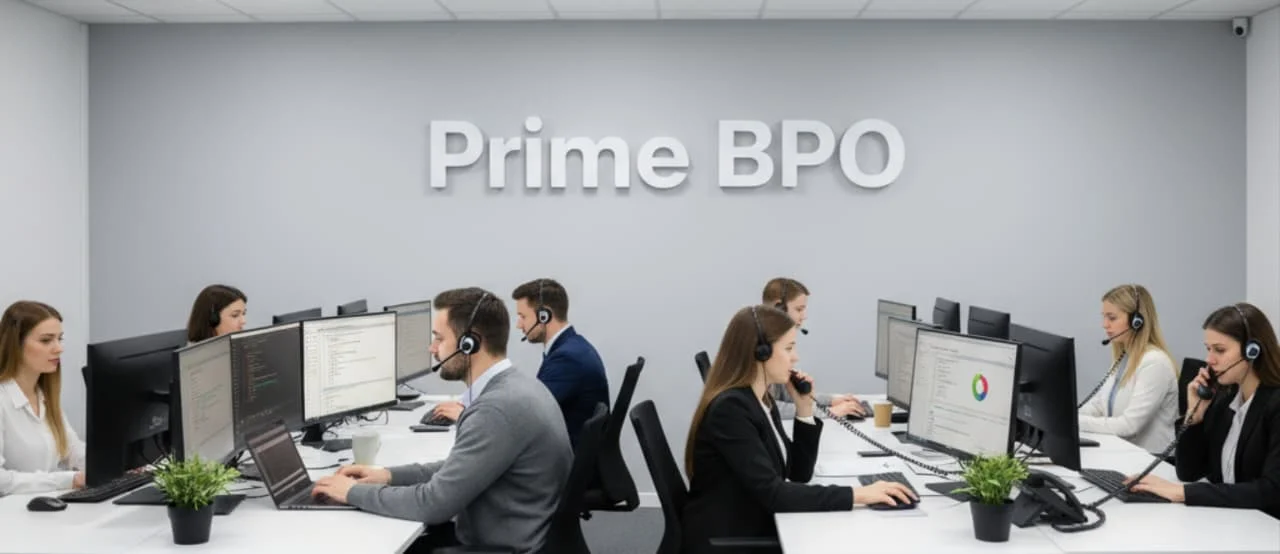
A shopper types a question into your website chat at 2 a.m. Another emails about a refund. A third sends a direct message on Instagram. Nobody picks up a phone, and nobody has to. Behind each of those messages is a trained agent working in a non-voice call center.
Non-voice support has moved from a side channel to the main way many customers ask for help. It is quieter, easier to track, and often cheaper than voice. It is also a growing career path for people who prefer written communication to phone calls.
Quick answer: A non-voice call center is a customer support operation where agents help customers through written or digital channels, such as live chat, email, social media, SMS, and ticketing systems, instead of spoken phone calls. A non-voice account is a client project or process that is handled this way. Businesses outsource it to scale support and cut costs. Job seekers apply for it as a typing-based, remote-friendly role.
This guide covers:
- The meaning of non-voice call center and non-voice account, and what a non-voice agent does
- Non-voice call center services and real examples
- Voice vs. non-voice call centers, in a comparison table
- Benefits of outsourcing non-voice support, and when to do it
- How to choose a provider such as Prime BPO
- A job and interview guide: duties, skills, work from home, and sample interview answers
What Is a Non-Voice Call Center?
A non-voice call center is a contact center where agents serve customers through written or digital communication instead of spoken phone calls. Typical channels are live chat, email, social media messages, SMS, and ticket-based helpdesks. ZipRecruiter describes the work as handling inquiries, support, and transactions through text-based channels, with typing skills, attention to detail, and multitasking as essentials.
The non-voice call center definition is simple, but the name confuses people because "call" is still in it. The term is a holdover from the traditional call center. Today the same operation may never take a single phone call.

What does "non-voice account" mean in a call center?
A non-voice account is a client project, campaign, or process in a call center that is handled without voice calls. For example, a company may have a voice account for inbound phone support and a separate non-voice account for chat and email. Agents are assigned to an account, and each account has its own scripts, tools, KPIs, and SLAs. If you see "non-voice account" in a job post, it means the role is text-based.
Core channels in a non-voice call center
- Live chat: Real-time messaging on a website or app.
- Email: Written, documented replies to detailed questions and complaints.
- Social media: Replies to comments and direct messages on platforms such as Facebook, Instagram, and X.
- SMS and messaging apps: Short, informal updates and follow-ups, including WhatsApp and Messenger.
- Ticket-based helpdesk: Requests logged as tickets in tools such as Zendesk or Freshdesk, assigned, tracked, and closed.
The role of a non-voice call center agent
A non-voice agent reads a customer's message, finds the right information, and writes a clear, polite, accurate reply. They work inside a helpdesk or CRM, follow brand tone, and meet response-time and quality targets. Many also handle back-office tasks such as data entry or order updates. The full job description, skills, and interview guide appear later in this article.
What Services Do Non-Voice Call Centers Provide?
Non-voice call centers provide chat support, email support, social media support, ticket management, technical troubleshooting through chat, and back-office processing such as data entry. Together these cover most written customer interactions, from pre-sale questions to after-sale problems.
|
Service |
What agents do |
Typical performance measures |
|---|---|---|
|
Live chat support |
Answer questions in real time, often handling several chats at once |
First response time, chat CSAT, concurrency |
|
Email customer support |
Write detailed replies, attach guides or screenshots, follow up |
First response time, resolution time, quality score |
|
Social media support |
Monitor and respond to mentions, comments, and DMs |
Response time, sentiment, escalation rate |
|
Ticket management |
Log, tag, prioritize, assign, and close tickets in a helpdesk |
Backlog size, SLA compliance, reopen rate |
|
Technical support via chat |
Troubleshoot software, device, or account problems step by step |
First contact resolution, handle time, accuracy |
|
Data entry and back-office processing |
Enter, verify, and update records, process refunds and orders |
Accuracy rate, turnaround time, error rate |
|
Customer inquiry management |
Triage and route requests across channels |
Routing accuracy, response time |
Note: Non-voice does not mean low skill. Good written support requires product knowledge, clear writing, and speed. Written replies also stay on record, so mistakes are visible and every response can be reviewed for quality.
Examples of Non-Voice Customer Support
Non-voice support appears wherever customers can type a question instead of calling: order tracking in e-commerce, troubleshooting in SaaS, public replies on social media, and automated helpdesk workflows. These examples show what a non-voice call center example looks like in practice.
E-commerce order tracking and refunds
A customer asks on live chat where their parcel is. The agent opens the order management system, checks the tracking status, and replies with the update and a delivery estimate. If the parcel is lost, the agent starts a refund or replacement, logs it in the ticket, and sends a confirmation email. Concurrency is common here: one agent may handle several short chats while other tickets wait in the email queue.
SaaS troubleshooting through live chat
A user cannot log in to a software tool. The agent asks for the error message, shares a screenshot guide, and walks through a password reset or browser fix. If the issue is a bug, the agent escalates to tier 2 with the full chat transcript attached, so engineers do not need to ask again.
Social media support and reputation management
A customer posts a complaint about a late delivery. The agent replies publicly with an apology and an acknowledgement, then moves the conversation to a direct message to collect order details. After resolving the issue, the agent logs the case and flags the theme for the product team. Fast, polite public replies protect the brand's reputation.
Automated helpdesk workflows
An incoming email is tagged by topic, routed to the right queue, and answered with a suggested article or macro. A chatbot handles FAQs such as store hours or return policy and hands off to a human when it detects frustration or a complex request. The agent steps in with the history already attached.
Back-office and data processing
Behind the scenes, non-voice agents enter orders, verify customer records, update accounts, and process documents. These tasks never involve a customer conversation, but they keep the support operation accurate and on time.
Voice vs. Non-Voice Call Center Services
Voice call centers handle live phone conversations one customer at a time. Non-voice call centers handle written conversations, often several at once. Voice suits urgent, emotional, or complex issues. Non-voice suits routine, technical, and documented requests, usually at a lower cost per contact.
|
Factor |
Voice call center |
Non-voice call center |
|---|---|---|
|
Communication medium |
Spoken phone calls |
Chat, email, social media, SMS, tickets |
|
Customer preference |
Customers who want an immediate human voice, or have urgent or sensitive issues |
Customers who prefer typing, want a written record, or are in places where they cannot talk |
|
Agent concurrency |
One customer at a time |
Several chats at once (commonly 3–5 on simple queries); email handled in a queue |
|
Cost per contact |
Higher, because each call takes the agent's full attention |
Generally lower, because agents can multitask and tickets can be batched |
|
Resolution pace |
Real time; issue often solved on the call |
Near real time for chat; hours for email, depending on SLA |
|
Records and QA |
Needs recordings and transcription |
Written record by default; easy to review and score |
|
Key skills |
Listening, tone, de-escalation, speaking clarity |
Typing speed, grammar, clarity, and multitasking |
|
Ideal use cases |
Complaints, billing disputes, urgent or complex cases |
Order status, tech troubleshooting, account updates, FAQs, follow-ups |
|
Common SLA measures |
Average speed of answer, abandonment rate, handle time |
First response time, resolution time, backlog, CSAT |
Note: Most mature support operations run both. A common model is non-voice for high-volume routine contacts, and voice for escalations and sensitive cases. Cost figures vary by region, provider, and complexity, so request quotes based on your own volumes rather than relying on averages.

Benefits of Outsourcing Non-Voice Support
Outsourcing non-voice support lets a business add trained agents, 24/7 coverage, and written records without building an in-house team. The main benefits are multitasking efficiency, lower operating overhead, round-the-clock availability, shorter waits, and easy quality review.
- Multitasking efficiency. Agents can handle several chats or work a queue of emails, so one agent serves more customers per hour than on voice.
- Lower operational overhead. Outsourcing replaces hiring, training, seats, equipment, and management time with a managed service. Providers also absorb attrition and replacement.
- 24/7 availability. Teams in different shifts or time zones can answer chat and email at night and on weekends, so customers are not left waiting until morning.
- Reduced hold times. Customers do not sit in a phone queue. They send a message and continue what they were doing.
- Written records for QA. Every chat and email is stored. Supervisors can sample, score, and coach from real examples, and disputes are easy to resolve.
- Easier scaling. Seasonal peaks and campaigns are handled by adding agents on shifts, not by long recruitment cycles.
- Access to a wider skill pool. Providers can supply agents trained on specific tools, channels, or languages.
TechBehemoths' guide to non-voice BPO lists similar advantages: streamlined operations, lower cost because fewer resources are needed, better customer satisfaction, and 24/7 support across time zones.
How Chat and Email Support Improve Customer Experience
Chat and email improve customer experience by giving fast, convenient help without the wait of a phone queue. Chat shortens first response time, email provides detailed documented answers, and both keep a consistent brand voice across channels. These gains show up in CSAT, NPS, and customer effort scores.
|
Impact area |
How non-voice helps |
|---|---|
|
Faster first response time (FRT) |
Chat answers in seconds to minutes; email auto-acknowledges, then replies within the SLA |
|
Convenience and discretion |
Customers can ask quietly at work, in transit, or at night |
|
Consistency |
Templates, macros, and a shared knowledge base keep replies on-brand |
|
Omnichannel continuity |
Context carries from chat to email to social inside one helpdesk |
|
Better CSAT and NPS |
Quick, accurate, polite replies raise satisfaction, and fewer repeat contacts lower effort |
|
Self-service links |
Agents send articles and guides in the reply, so customers can solve similar problems next time |


























Operational targets that matter
- First response time: Define a target by channel, such as seconds to a few minutes for chat and a set number of hours for email.
- Concurrency: A chat agent often handles several conversations at once. Keep the cap realistic, because too many chats at once lowers quality.
- Resolution quality: Track first contact resolution, reopen rate, and QA scores so speed does not replace accuracy.
- Accuracy for back-office work: Set accuracy targets for data entry and processing, and audit samples regularly.
- SLA compliance: Measure the share of contacts answered and resolved within the agreed time.
Note: Faster is not always better. A quick but wrong or impersonal reply creates repeat contacts and hurts satisfaction. Pair speed targets with QA scoring and customer feedback.
When Should a Business Outsource Non-Voice BPO Services?
Outsource non-voice support when ticket backlogs, time-zone gaps, seasonal peaks, or back-office bottlenecks start to hurt response times and costs. If your team spends more time catching up than improving service, outsourcing is usually cheaper than hiring ahead of demand.
- ☐ Email or ticket backlogs grow week after week, and first response times keep slipping
- ☐ Customers in other time zones wait overnight for replies
- ☐ Peak seasons or campaigns create volume you cannot staff with permanent hires
- ☐ Order processing, refunds, or data entry delay support teams
- ☐ You want to add live chat or social support but lack trained agents
- ☐ Management time is consumed by recruiting, training, and scheduling
- ☐ You need documented QA and SLA reporting but have no tools or capacity
- ☐ You are expanding into new regions or languages
If you tick three or more, request quotes from non-voice BPO providers and compare scope, SLAs, and pilot options.

Get Free Quotes
Customized Options Await
How to Choose a Non-Voice Customer Support Provider
Choose a non-voice provider by checking quality certification, SLA commitments, data security, platform compatibility, and ability to scale agent teams. Ask for a pilot and real reporting samples before you sign. TechBehemoths' guide to non-voice BPO suggests similar checks: experience, track record, quality assurance, technology, data security, pricing, and communication.
|
Criterion |
What to ask |
Why it matters |
|---|---|---|
|
Quality certification |
Is the provider certified, for example ISO 18295-1 for customer contact centers? How often is it audited? |
Shows documented quality processes |
|
SLA guarantees |
What response and resolution targets are written into the contract? What happens if they are missed? |
Turns promises into accountability |
|
Data security |
How is customer data protected, who has access, and how are devices and networks secured? |
Written support involves personal and payment information |
|
Platform compatibility |
Can agents work inside your helpdesk and CRM, such as Zendesk, Freshdesk, or Gorgias? |
Avoids data silos and migration costs |
|
Scalable teams |
Can the provider add agents quickly for peaks and reduce them afterward? |
Controls cost and protects service levels |
|
Reporting |
Will you get weekly KPI reports with FRT, FCR, CSAT, and QA scores? |
Lets you manage performance, not guess |
|
Training and QA |
How are agents trained on your brand, and how are replies scored? |
Keeps tone and accuracy consistent |
|
Pilot option |
Can you test one channel before committing? |
Reduces risk |
Why Prime BPO is a strong option for non-voice support
Prime BPO provides outsourced customer service and call center solutions through dedicated, scalable teams with 24/7 support. Prime BPO and Telecommunications is certified to ISO 18295-1:2017 for inbound and outbound customer contact and functional support. In its own published guide to non-voice outsourcing, Prime BPO describes its teams as trained, multilingual, and tech-enabled, covering chat, email, social media, and back-office work.
Businesses that want to add digital support without building a team from scratch can scale digital support with Prime BPO by requesting a free consultation. Prepare your monthly volume by channel, peak periods, tools, and target response times so the provider can propose staffing and pricing around them.
Note: No provider is right for every business. Compare at least two or three, run a pilot on one or two channels, and agree on KPI definitions before you scale.
Non-Voice Call Center Job & Interview Guide
A non-voice call center agent answers customer questions in writing through chat, email, and social media, and logs the work in a helpdesk or CRM. The job suits people who type fast and accurately, write clearly, and stay calm while juggling several conversations. Many roles need no phone calls at all.

Non-voice call center agent job description
The agent is the written voice of the company. They read incoming messages, identify the problem, find the answer, and respond in the brand's tone. They escalate complex or sensitive cases and record each interaction for quality and reporting.
Duties and responsibilities
- Respond to customer chats, emails, and social media messages within the SLA
- Handle several chat conversations at the same time while keeping replies accurate
- Troubleshoot product or account issues step by step through written instructions
- Log, tag, and update tickets in the helpdesk or CRM
- Process orders, refunds, address changes, and account updates
- Follow scripts, macros, and knowledge base articles, and personalize them to the customer
- Escalate complex, urgent, or sensitive issues to the right team
- Perform data entry and verification with high accuracy
- Meet KPIs such as first response time, resolution rate, quality score, and CSAT
Skills and requirements
|
Skill or requirement |
What employers usually look for |
|---|---|
|
Typing speed and accuracy |
Often around 40–50+ words per minute with high accuracy; many employers use a typing test |
|
Written English |
Strong grammar, spelling, and tone; ability to write clear, polite replies |
|
Multitasking |
Comfort handling several chats or tickets at once without losing accuracy |
|
CRM and helpdesk familiarity |
Experience with tools like Zendesk, Freshdesk, or HubSpot is a plus; training is often provided |
|
Problem-solving |
Ability to find answers quickly and think through issues |
|
Attention to detail |
Accurate order, account, and data handling |
|
Computer skills |
Browsers, email, spreadsheets, chat platforms |
|
Education |
Often high school or equivalent; some employers prefer a degree or related experience |
Requirements differ by employer and country, so always read the specific job post.
Non-voice call center work from home
Yes, many non-voice roles can be done remotely, because the work needs a computer and internet, not a phone line. Employers usually require a reliable device, a stable connection, a quiet workspace, and strict data privacy practices. Some employers hire fully remote, some use hybrid schedules, and some require on-site work for security or training. Confirm the arrangement before applying.
Non-voice call center training
Training typically covers the company's products and policies, tone and writing standards, the helpdesk and CRM tools, typing and accuracy drills, and QA expectations. New agents are often paired with a mentor and monitored closely during the first weeks. Many start on simpler queues, such as email or basic chat, before taking on technical or escalated cases.
How to find non-voice call center jobs
Search job boards for phrases such as "non-voice process," "chat support," "email support," "customer service representative (chat)," or "back-office support." Check BPO company career pages directly. You can see current openings at Prime BPO's jobs page.
Note: Practice before the assessment. Take free typing tests, rewrite a few sample customer replies for clarity, and review basic grammar. Employers often test typing and writing before the interview.
Non-voice call center interview questions and answers
Expect questions about your writing, multitasking, and how you handle pressure. Use the sample answers below as a model and replace the details with your own experience. Keep answers specific, calm, and customer-focused.
- Tell me about yourself.
"I have two years of experience in customer support, mostly handling email and live chat for an online store. I type about 55 words per minute with high accuracy, and I enjoy writing clear replies that solve the problem the first time. I am looking for a non-voice role where I can use those skills and keep growing in a structured support team."
- What do you understand about a non-voice process, and why do you want to work in it?
"A non-voice process is a customer support or back-office process handled in writing, such as chat, email, and tickets, with no phone calls. I want to work in it because I write well, I stay organized with several conversations, and I like that written replies can be reviewed and improved."
- How do you handle multiple chats at the same time?
"I use a simple routine. I read each message fully, reply with a quick acknowledgement, and then work on the answer. I use saved replies for common questions and personalize them with the customer's name and details. I keep notes in the ticket so I never mix up conversations. If one chat becomes complex, I tell the customer I am checking and move on to others while I research."
- How would you respond to an angry customer in writing?
"I start by acknowledging the frustration and apologizing for the inconvenience, without blaming anyone. Then I state clearly what I will do and when. For example: 'I am sorry your order arrived late. I understand how frustrating that is. I have checked your tracking, and I have arranged a replacement that ships today. You will receive an email with the new tracking number within the hour.' I keep sentences short and avoid defensive wording. If I cannot resolve it, I will escalate with the full history."
- What is your typing speed, and how do you keep it accurate?
"My typing speed is about 50 words per minute with around 97 percent accuracy on tests. I focus on accuracy first because errors cause repeat contacts. I proofread before sending, use spell check, and practice daily."
- What do you do if you do not know the answer?
"I search the knowledge base and previous tickets first. If I still do not know, I tell the customer honestly that I am confirming the details and give a time frame. I ask a senior colleague or my team lead, and then I reply with the correct information. I also note the gap so the knowledge base can be updated."
- How do you keep your tone professional when you cannot use your voice?
"I use a friendly, plain style, short paragraphs, and polite phrases. I avoid capital letters, slang, and jargon. I reread the message from the customer's point of view before sending. Using their name and referring to their specific issue also helps the reply feel personal."
- Tell me about a mistake you made and what you did.
"Once I sent a customer the wrong return instructions. I noticed it during a quality check, contacted the customer immediately, apologized, and sent the correct steps. I told my team lead and asked for the template to be corrected. Since then, I double-check templates before sending."
- Are you comfortable with shifts and working from home?
"Yes. I have a reliable computer and a stable internet connection, and a quiet space for work. I am comfortable with rotating shifts, and I understand the importance of data privacy when working remotely."
Interview tips
- Arrive early for any typing or written assessment and read instructions carefully.
- Bring examples of written work or a short portfolio of sample replies, if you have them.
- Show that you understand SLAs, such as first response time and resolution rate.
- Ask about training, tools, shift schedules, and how quality is measured.
- Proofread any emails you send to the recruiter. They are part of your assessment.
Conclusion: The Shift Toward Written Customer Service
Customers increasingly choose to type instead of call, and businesses are following. A non-voice call center delivers fast, documented, and scalable support across chat, email, social media, and tickets, often at a lower cost per contact than voice. For job seekers, it offers a structured, remote-friendly career built on typing speed, clear writing, and multitasking.
If backlogs, time zones, or seasonal peaks are slowing your team down, outsourcing non-voice support is one of the fastest ways to add trained capacity.
Build a 24/7 Non-Voice Support Team With Prime BPO
Prime BPO helps businesses build dedicated, scalable support teams with 24/7 coverage and ISO 18295-1:2017 certified customer contact operations. Whether you need chat, email, social media support, ticket management, or back-office processing, Prime BPO can design a team around your volumes, tools, and service levels.
- Share your channels, monthly volumes, and peak periods.
- Agree on targets for first response time, resolution, accuracy, and CSAT.
- Start with a pilot, then scale digital support with Prime BPO as results come in.
Book a free consultation with Prime BPO · Explore Prime BPO customer service solutions · Visit primebpo.com
Get Free Quotes
Customized Options Await
Frequently Asked Questions
What is a non-voice call center?
A non-voice call center is a customer support center where agents help customers through written channels such as live chat, email, social media, SMS, and ticketing systems instead of phone calls.
What is a non-voice account in a call center?
A non-voice account is a client project or process in a call center that is handled without voice calls. Agents assigned to it work through chat, email, social media, tickets, or back-office tasks such as data entry. Each account has its own scripts, tools, and performance targets.
Is non-voice support cheaper than voice support?
Usually yes. Non-voice agents can handle several chats at once and work through email queues, so each agent serves more customers per hour than on voice. Costs still vary by provider, region, volume, and complexity, so compare quotes for your own needs.
Can non-voice call center agents work from home?
Yes, many can. Because the job needs a computer and internet but not a phone line, employers often allow remote or hybrid work. They typically require a reliable device, a stable connection, a quiet workspace, and secure handling of customer data. Policies depend on the employer.
What is the difference between voice and non-voice call centers?
Voice call centers handle live phone conversations one at a time. Non-voice call centers handle written conversations on chat, email, and social media, often several at once. Voice suits urgent or sensitive cases, while non-voice suits routine, technical, and documented requests.
What does a non-voice call center agent do?
A non-voice agent answers customer messages, troubleshoots problems, updates tickets, processes orders or refunds, and escalates complex issues. They meet response-time and quality targets and follow the company's tone and procedures.
What skills do I need for a non-voice call center job?
The main skills are fast, accurate typing, clear written English, multitasking, attention to detail, and basic computer or CRM knowledge. Many employers test typing speed and writing during hiring, and they provide product training.
Do non-voice call center agents need to speak English fluently?
They need strong written English for English-language accounts, but they do not need to speak on the phone. Clear grammar, spelling, and tone matter more than accent or speaking ability.
What are common non-voice call center interview questions?
Common questions include: tell me about yourself, what is a non-voice process, how you handle several chats at once, how you answer an angry customer in writing, what your typing speed is, and what you do when you do not know the answer. Sample answers appear in the interview section above.
Sources And 2026 Verification
Definitions, services, and job requirements in this guide were checked against provider, directory, and recruitment pages on non-voice call centers. Details about Prime BPO's services, 24/7 support, dedicated teams, and ISO 18295-1:2017 certification come from Prime BPO's own website. Prime BPO's description of its teams as multilingual and tech-enabled comes from its own published non-voice guide. Notes on the ISO 18295 standard and typical staffing practices reflect general industry knowledge.
Typing-speed ranges, concurrency levels, and interview answers are illustrative. Actual requirements, targets, pricing, and service scope vary by employer, provider, and contract. The sample interview answers are models to adapt, not scripts.
- Magellan Solutions: Non-voice call center outsourcing services (opened Oct 12, 2026)
- TechBehemoths: Non-voice BPO companies in Rawalpindi (opened Oct 12, 2026)
- ZipRecruiter: What is a non-voice call center? (opened Oct 12, 2026)
- Prime BPO: Home (opened Oct 12, 2026)